Let Baking Pan Cool Before Using Again Baking -frying
This no-knead v-minute artisan bread explains how to make bootleg bread in just minutes a twenty-four hours without fuss. Quick, easy, rustic, entirely doable even by novices, and the best staff of life you'll always bake.
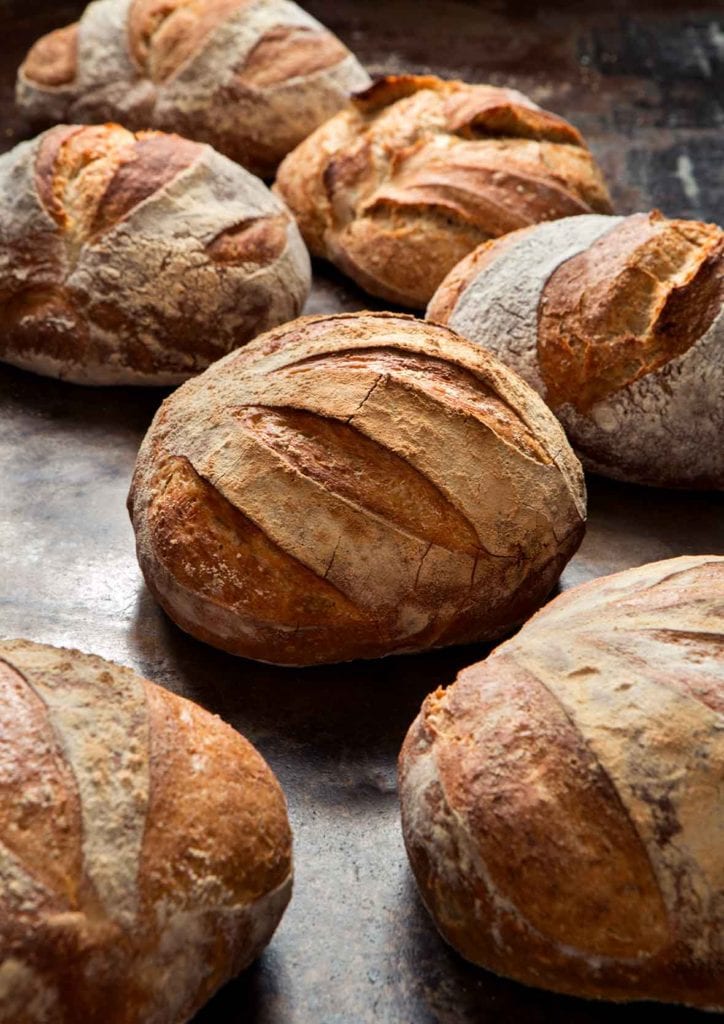
This no-knead v-minute artisan breadstuff is truly "revolutionary." That'due south the word the authors who created this quick homemade bread recipe employ to draw it, and we couldn't agree more. Like so many rustic bread recipes, it relies on just pantry staples of all-purpose flour, yeast, salt, and h2o. But what distinguishes this recipe, its truthful genius, is the technique. There's no kneading required.
More than that, though, you tin stash it in the fridge for later on. So you simply forget almost information technology until you're overtaken by the craving for freshly broiled bread. When that happens, you but take hold of the dough from the fridge, lop off enough for a loaf, shape it, let it residual a few moments, and then slide it in the oven before you continue to go well-nigh your life. We're talking five minutes of effort hither. Seriously. Just don't forget to come back subsequently to retrieve the best loaf of artisan bread you've ever experienced from the oven.–David Leite
No-Knead 5-Infinitesimal Artisan Bread FAQs
Does this bread actually take merely five minutes?
Okay. If you want to get technical, this breadstuff does take a little more 5 minutes to brand, merely that'south only if you include the resting and baking time. But in terms of bodily effort? Seriously, it'southward simply 5 minutes. Nosotros've relied on this recipe hundreds of times, and we tin clinch yous that 5 minutes hands-on time is all you lot'll always invest at any given stage in the recipe. That's goose egg for a loaf of rustic artisan staff of life that's homemade. Nothing short of a miracle, that is.
Can I bake this in a Dutch oven? If yes, oven temp and cook time?
You absolutely tin can employ a Dutch oven hither. I do it often. Utilize the temperature stated in the recipe. Y'all'll want to preheat your Dutch oven (and its tight-fitting lid) for at least 30 minutes. To assistance you lower the loaf in the pan without burning yourself, brand a parchment-paper sling.
Why is my no-knead breadstuff soft not crusty?
There are several reasons. The biggest issue is a poorly calibrated oven. Fifty-fifty twenty-five degrees can make a difference. Always use an oven thermometer to be absolutely sure.
The second issue is not plenty steam in the oven. Now, I know what y'all're thinking: How can moist steam brand for a dry well-baked crust? It all has to do with the starches nowadays in the flour. When the breadstuff bakes, its skin estrus upward enough so that the starch molecules pop open up and become jelly-like. They so proceed to bake and firm up to a crusty loaf. The wet from steam is what kicks this process into action.
In step 14, the hot h2o splashed into a shallow pan is what creates that steam. If you utilize a Dutch oven, there's enough steam from the wet dough to exercise the job. Although, I oft toss a few water ice cubes in the pot for good measure
How To Make Other Shapes Of Staff of life
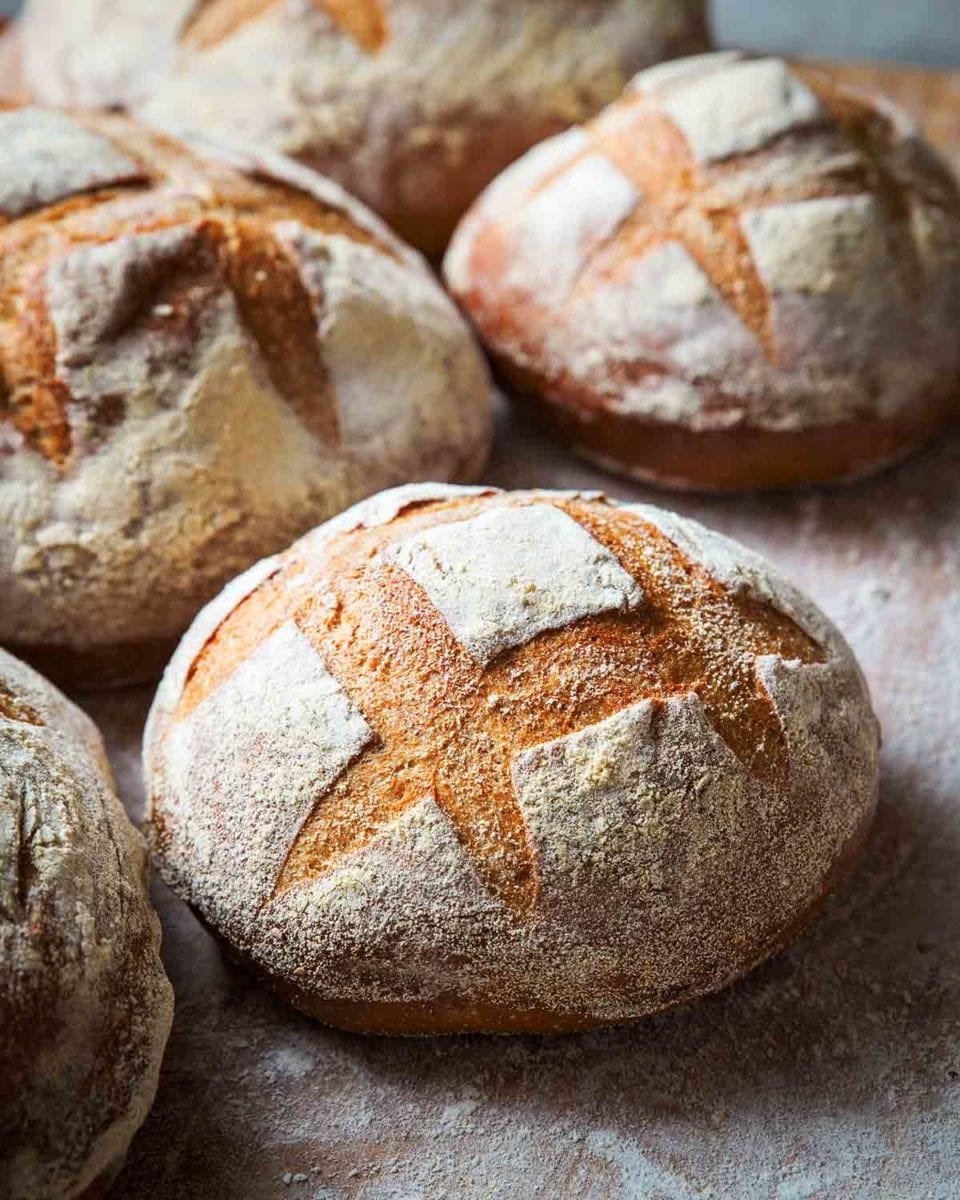
The authors created this recipe and so that information technology tin suit whatever shape loaf, whether the round boule you meet in the photo above, a baguette, bâtard, ciabatta, couronne, crusty white sandwich loaf, Pullman sandwich loaf, or soft dinner rolls. The recipe below instructs you on how to make the French boule (pronounced "bool" and meaning "ball"). But if you're experienced in shaping the others, or want to Google instructions on the others, the dough will work admirably.
No-Knead 5-Minute Artisan Staff of life

This no-knead 5-infinitesimal artisan breadstuff testify y'all how to make homemade staff of life in only minutes a twenty-four hours without fuss. Quick, easy, rustic, entirely doable even by novices, and the best loaf yous'll ever broil.
- three cups lukewarm water (100°F or 38°C) plus more for the broiler tray
- 1 tablespoon granulated yeast (active dry, instant, quick rise, or bread machine is fine)
- 1 to i 1/2 tablespoons kosher or other coarse common salt to gustatory modality
- 6 1/2 cups unbleached all-purpose flour measured by the scoop-and-sweep method
- Cornmeal for dusting (optional)
Make the dough
-
Warm the 3 cups h2o just a little so that it feels but slightly warmer than body temperature. That should put it at about 100°F (forty°C).
-
In the big bowl of a continuing mixer or a 6-quart container with a lid, mix the yeast, warm h2o, and salt. Don't worry about getting the yeast to deliquesce.
-
Add the flour to the yeast mixture all at once, then apply a spoon or stand mixer to mix until the flour is completely incorporated and you have a blobby dough. (If you lot're hand-mixing the dough and information technology becomes too hard to incorporate all the flour with the spoon, only use very wet easily to press the mixture together.) Don't knead the dough! Information technology's not necessary. You just want the dough to be uniformly wet and loose plenty to conform to the shape of its container. All you lot need to exercise is be certain that at that place are no dry patches of flour.
-
Loosely encompass the container and let the dough hang out at room temperature until it begins to rise and collapse or at least flatten a little on the summit, about 2 hours. (Relax. It's staff of life dough, not a newborn. You don't need to monitor it constantly. And don't worry about the dough being precisely double or triple its original volume every bit you would with a traditional staff of life recipe. Simply walk away, become nigh your business concern, and come dorsum in two hours. Seriously.)
Stash the dough in the fridge
-
After 2 hours, stash the container of dough in the fridge. That's it. (If your container isn't vented, you want to ensure the gases tin escape past leaving the encompass open a crevice for the commencement couple days in the fridge; after that, y'all tin seal information technology.)
-
Y'all can use the dough anytime after the initial 2-hour rise, although the refrigerated moisture dough is less sticky and easier to work with than dough at room temperature, and then it's best to air-condition the dough overnight earlier handling it. Once refrigerated, the dough will seem to have shrunk back upon itself as though it volition never rise again—that's normal. Whatever y'all practice, do not punch downwards this dough. You're trying to retain as much gas in the dough as possible, and punching it down knocks gas out and results in denser loaves. Just be certain to use the dough at some indicate within 14 days.
Shape the dough into a loaf
-
When you want to bake a loaf of artisan staff of life, dust a pizza skin or a baking sail turned upside down with cornmeal or line it with parchment paper.
-
Take hold of a hunk of the dough and use a serrated knife or scissors to cut off about a i-pound piece of dough. Hold the dough in your hands and, if necessary, add simply enough flour so the dough doesn't stick to your hands. (What you're trying to practise is surround the surface of the dough with flour so that information technology can exist handled. Yous're not trying to incorporate more than flour into the dough, then for the love of all things good, resist the temptation to get rid of all the dough'southward inherent and lovely stickiness by working the flour into the dough.)
-
Gently stretch the surface of the dough, tucking the ends underneath the ball and rotating it a quarter plough every bit you lot go. (See video above.) Almost of the dusting flour will fall off, and that's okay, because as we but said, it'south not intended to exist incorporated into the dough. The bottom of the brawl of dough may appear to be a collection of bunched ends, but it will flatten out and adhere during resting and baking. The rest of your circular loaf should exist smooth and cohesive, and the entire shaping process should take no more 20 to twoscore seconds—don't work the dough whatever longer or your loaves may be dumbo.
-
Place the ball of dough on the prepared pizza peel or baking sheet, seam side downwards with all the collected bunched ends on the peel or lath. Let it rest for about 40 minutes. It doesn't demand to be covered. (You may not see much rise during this catamenia, just don't fret. It volition ascension much more than during baking.)
Bake that gorgeous-looking loaf
-
Preheat the oven to 450°F (230°C) for at to the lowest degree 20 to 30 minutes. Preheat a baking rock (or an upside-downwards cast-iron skillet or baking sheet) on a middle rack for at least 20 to 30 minutes. Place an empty metallic broiler tray on any rack that won't interfere with the ascension bread. (Do not utilise a glass pan every bit it could shatter.)
-
Dust the top of the raised loaf generously with flour and, using a serrated staff of life knife, slash a ane/two-inch-deep cross or a couple gashes or a tic-tac-toe pattern in the height. There'south no need to grit the flour off the loaf.
-
Place the far edge of the peel or the upside-downward baking sheet in the oven on the baking stone or cast-atomic number 26 skillet or upside-downwardly blistering sheet a few inches beyond where you want the bread to land. Give the pare or baking sheet a couple quick back-and-forth jiggles and then abruptly pull it out from under the loaf. The loaf should land on the baking rock with very little drama.
-
Chop-chop but carefully cascade about 1 cup hot h2o into the broiler tray and immediately shut the oven door to trap the steam. Bake the bread for a total of 20 to 35 minutes, until the crust is richly browned and firm to the bear on. Considering the dough is so wet, there's very little risk of information technology condign dry despite how night the crust may become. (If you're using a baking sheet rather than a baking stone, you may need a little extra time—upward to 50 minutes total—for the staff of life to be washed.)
-
Remove the staff of life from the oven and permit the loaf cool completely, preferably on a wire rack for the best flavor, texture, and slicing. (Crazily enough, a perfectly baked loaf volition audibly crackle, or "sing," when initially exposed to room temperature.) The crust may initially soften only volition house when cooled.
Serving: 1 slice Calories: 74 kcal (4%) Carbohydrates: 16 g (v%) Poly peptide: 2 grand (4%) Fat: i g (2%) Saturated Fat: 1 yard (half-dozen%) Polyunsaturated Fat: i k Monounsaturated Fat: one g Sodium: 263 mg (11%) Potassium: 23 mg (1%) Cobweb: 1 thousand (4%) Sugar: 1 g (1%) Vitamin A: 1 IU Vitamin C: 1 mg (i%) Calcium: 4 mg Iron: one mg (6%)
Recipe Testers' Reviews
Originally published February 27, 2019
Recipe © 2013 Jeff Hertzberg and Zoë François. Photos © 2013 Stephen Scott Gross. All rights reserved. All materials used with permission.
 If yous brand this recipe, snap a photo and hashtag it #LeitesCulinaria. We'd love to meet your creations on Instagram, Facebook, and Twitter.
Source: https://leitesculinaria.com/93789/recipes-5-minute-artisan-bread.html
0 Response to "Let Baking Pan Cool Before Using Again Baking -frying"
Post a Comment