7 Elements of Art Space Photographs That Show Value Element
Within: The ultimate collection of elements of art examples and elements of art definitions, plus helpful resource for teaching the elements of fine art.
What are the Elements and Principles of Art?
The elements of art and principles of design are the primal pieces that make upward an artwork. Most works of art will make use of many or all of the elements and principles of art. Nosotros often judge art by how finer the artist used these design fundamentals fifty-fifty earlier we learn about them.
The elements of fine art are the edifice blocks of an artwork: color, line, shape, form, value, texture, and space. They are the tools artists utilize when creating an artwork.
The principles of design are how those building blocks are arranged: contrast, rhythm, proportion, residuum, unity, accent, movement, and diverseness. They are the ways an creative person can organize the elements of art to create a broad range of effects.
Each of these art fundamentals are closely related and many of them overlap. When combined, they produce a complete artistic vision.
Why are the Elements and Principles of Art Important?
Knowing the elements and principles of art boosts visual literacy. Artists and creators brand more powerful works when they apply the principles of art. When viewers are familiar with the elements of fine art, they get more than aware of the details and can better appreciate what they see and the bulletin behind it.
Connecting with art makes usa more than empathetic and strengthens the cloth of club. In the age of the internet, understanding how and why advertisers brand design decisions can empower students with data and make them less susceptible to manipulation.
Teaching the Elements and Principles of Fine art
I in one case said that I detest the elements and principles of art, but that's non quite accurate. The elements and principles of art are a lens through which to view and understand fine art, but they are not what makes art education vital. Art inspires higher level thinking, focus, a growth mindset, visual literacy, curiosity, respect, and connection. The elements and principles of design are an creative person's toolbox. Knowing the tools not merely improves students' studio art skills and gives them deeper appreciation when viewing artworks, information technology helps make them amend, more informed citizens and prepares them for a visually complex and culturally interconnected modern world in need of creative problem solvers.
Beneath you'll find an explanation of each of the elements and principles of fine art, including artwork examples and links to helpful materials for instruction the individual concepts.
Please note, this post includes Amazon chapter links. As an Amazon Associate I earn from qualifying purchases.
Download the Free Elements and Principles Printable Pack
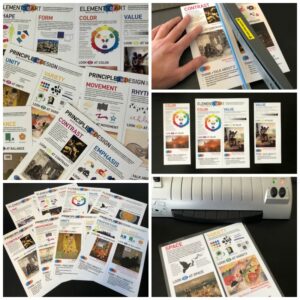
Gratis Resource!
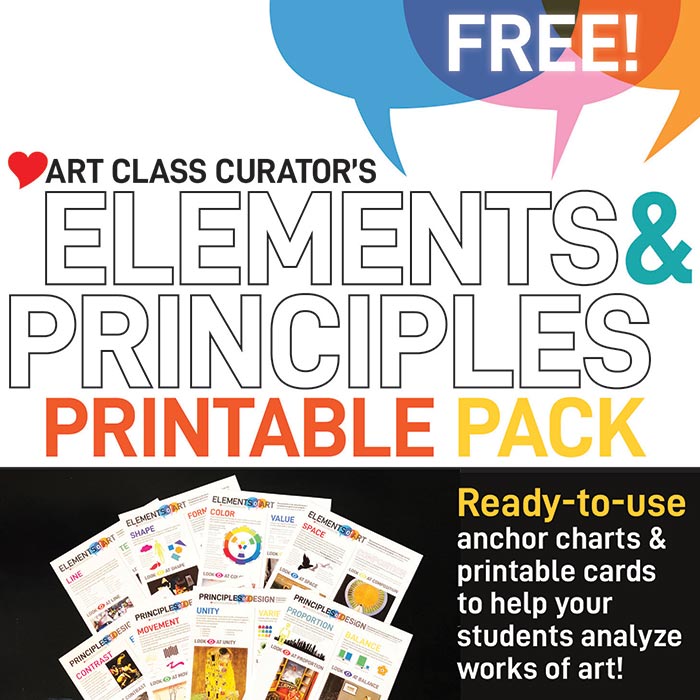
Elements & Principles Printable Pack
The Elements & Principles of Fine art are the foundation of every artwork, but teaching them can be a bore. Wake your students up and engage them with full color artworks, easy to sympathize definitions, and thought-provoking higher level thinking questions. This versatile resource can be hung in the classroom or used as an fine art manipulative.
This pack of printables was designed to work in a variety of ways in your classroom when teaching the elements and principles of art. You can print and hang in your classroom as posters/anchor charts or you can cut each element and principle of art in its own individual card to use as a lesson manipulative.
Elements of Art Examples and Definitions
Scroll beneath for each element or click the link to be taken to the appropriate section:
- Colour
- Line
- Shape
- Class
- Value
- Texture
- Infinite
Color
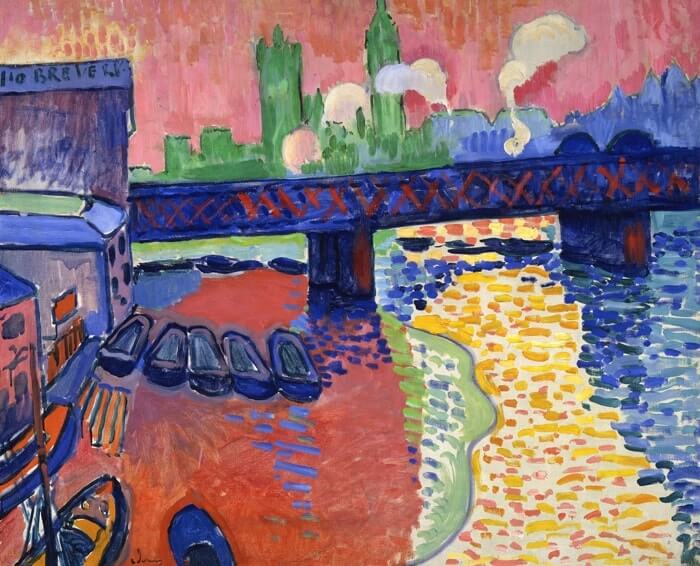
Color is the visual holding of the pigment of an object that is detected by the eye and produced as a result of the way the object reflects or emits lite. The human being eye is capable of seeing millions of colors, making it one of the most diverse and powerful elements of art.
Each color has three properties—hue, value, and intensity. Hue is the proper name of a color. Value is a colour's lightness or darkness, which is altered when black or white is added. Intensity refers to the intensity of a color, often measured by boldness or dullness.
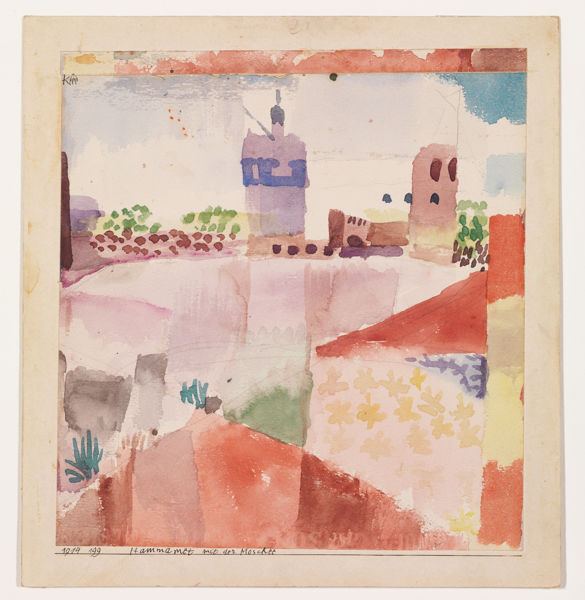
In this example of color in fine art, Paul Klee shows contrast between high intensity and low intensity colors past using more or less water with his paint.
Master Colors
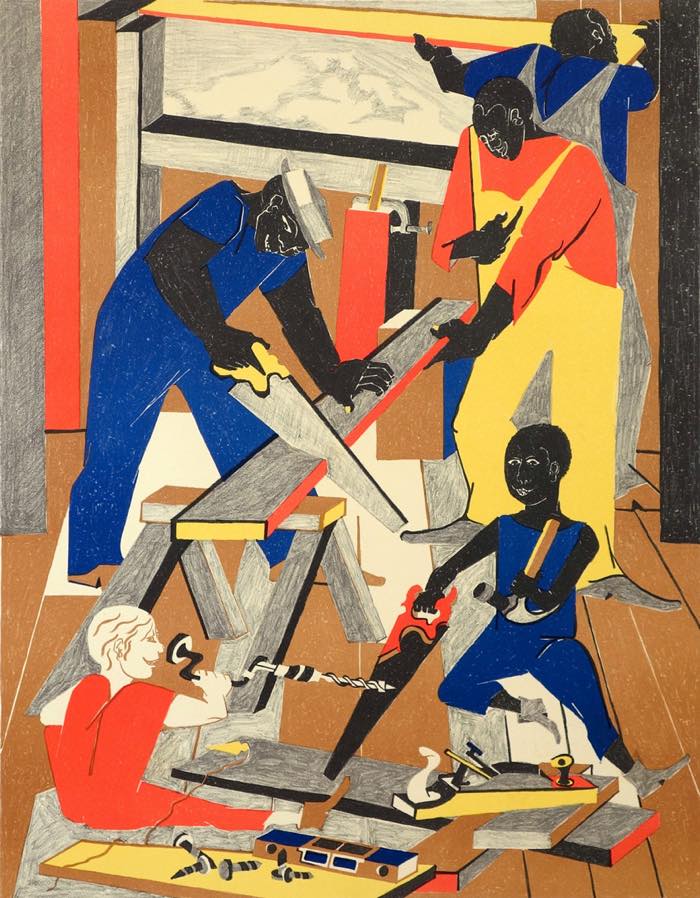
All colors come from the 3 primary colors—carmine, blueish, and yellowish. You lot cannot mix any colors to create a principal color. They are the base hues for all other colors.
In this instance of master colors in art, Jacob Lawrence uses only neutral colors with the primary colors of crimson, blue, and yellowish.
Looking for more examples of main colors in art? Cheque out our post of color in art examples and definitions post!
Complementary Colors
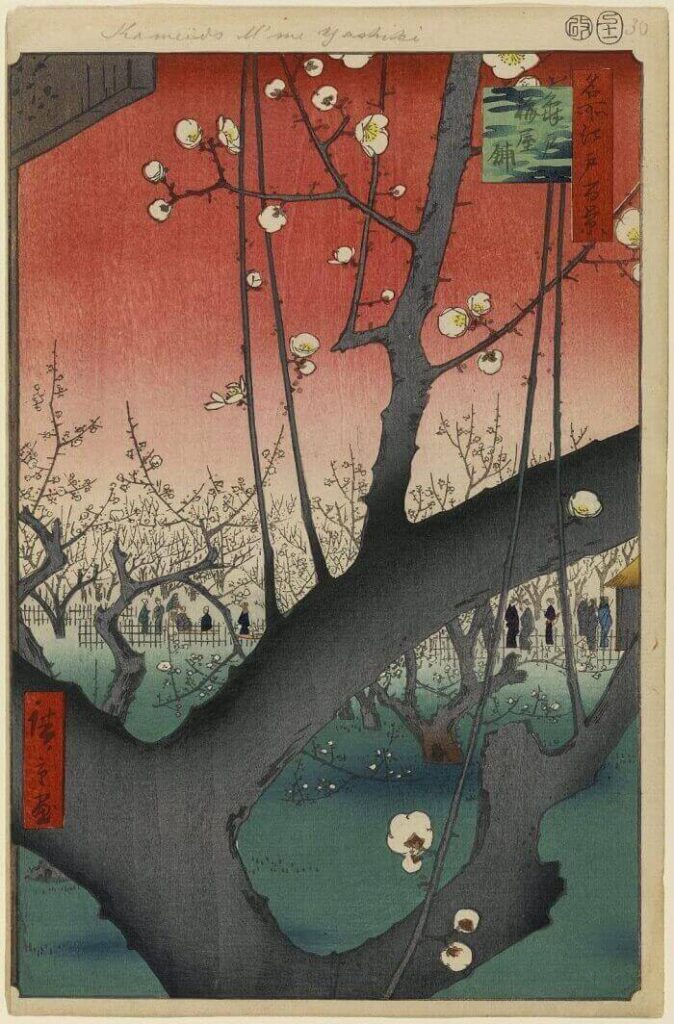
To detect a pair of complementary colors, merely draw a line from ane of the color bike to the other. Complementary colors are called that because, when placed side by side, they are pleasing to the eye. They create an appealing contrast in artworks. Some of the bones complementary color pairings are cherry-red and green, purple and yellow, and orange and blue.
In this example of complementary colors in art, Hiroshige uses ruddy and dark-green to create dissimilarity.
For more than examples of complementary colors in art, check out the full color in art examples mail!
Analogous Colors
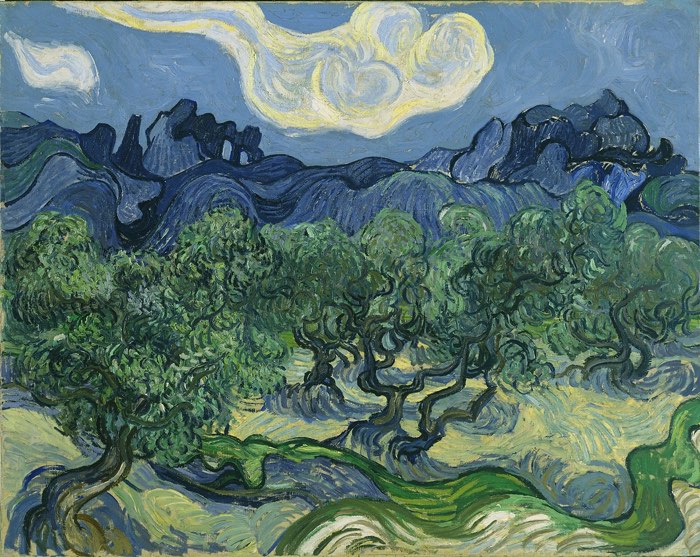
To find a pair of analogous colors, simply cull two colors that are touching on the colour wheel. Analogous colors create harmony and unity in art because they are fabricated of the same hues. Some of the basic analogous color pairings are blue and green, red and orange, and yellow and greenish.
In this example of analogous colors in art, Vincent van Gogh uses colors next to ane some other on the color wheel–blueish, green, and yellow.
Looking for more than examples of analogous colors in art? Check out the Color in Fine art: Examples & Definitions post!
Warm and Cool Colors
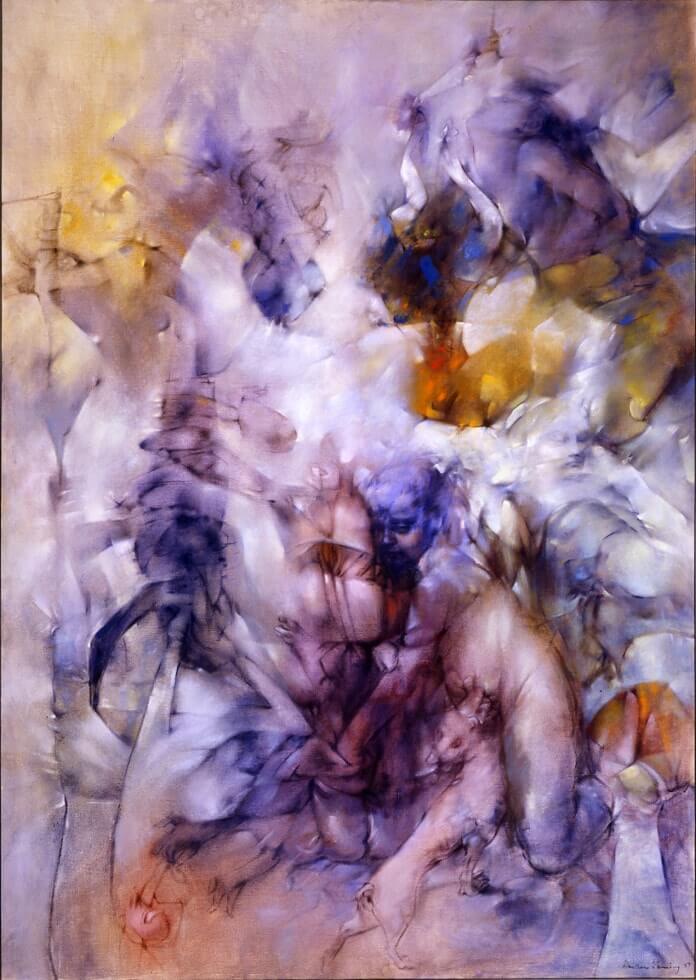
Warm colors are reds, oranges, and yellows. They pop out towards viewer, and create free energy and excitement in an artwork. On the other paw, the cool colors of blues, greens, and violets recede from the viewer's eye and create a calming outcome.
In this example of warm and absurd colors in art, Dorothea Tanning contrasts warm with cool colors to show the disharmonism of remainder and restlessness in insomnia.
For more than examples of warm and cool colors in art, check out the full colour mail!
Color in Art Resources

- The Ultimate Collection of Colour in Art: Examples & Definitions
- Color in Art Lesson
- I Spy Colors in Art (Book)
- Vincent'south Colors (Book)
- My Many Colored Days (Book)
- The Virtual Instructor: Colour Theory
- High-sounding Factory: Color
Art Class Curator has a full color wheel lesson available in the Curated Connections Library including all of following color wheel topics: principal, secondary, intermediary/tertiary colors, analogous colors, complementary colors, monochromatic colors (tints/shades), absurd/warm colors, and mood.
Line
Line is an chemical element of art divers as the path of a indicate moving through space. There are many types of line in fine art. Lines may be continuous or broken, and tin can be whatever width or texture. The great variety of line types make them an peculiarly useful tool in artworks.
Management of Line
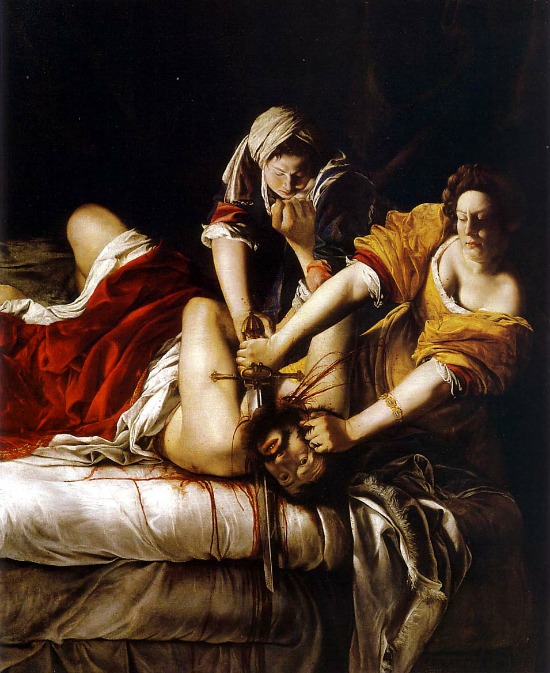
The direction of a line can dramatically change an artwork. Diagonal lines create movement an energy. Horizontal and vertical lines add stability and strength to an artwork.
In this example of directional lines in art, Artemisia Gentileschi uses both diagonal lines to prove the free energy and excitement of the scene and vertical lines (in Judith'due south bellboy) to prove strength.
Looking for more examples of directional lines in art? Check out this post about line!
Profile Lines
Contour lines form the exterior edge of a iii-dimensional shape and clearly defines the area it occupies.
Look at the face of Leonardo da Vinci beneath; the profile lines effectually his facial features give his confront class.
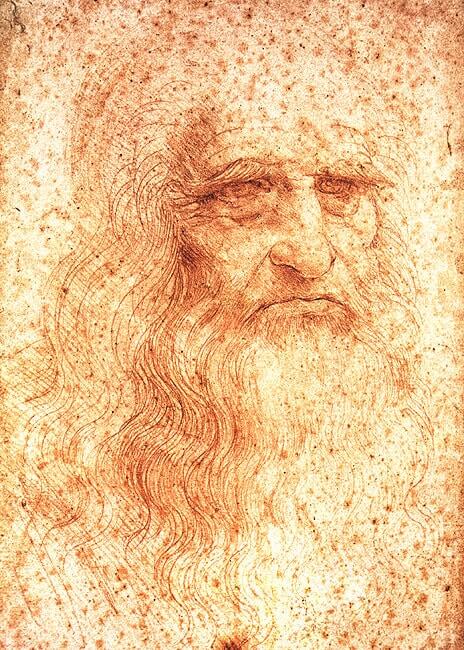
Looking for more examples of contour lines in art? Check out the Artworks That Evidence Line postal service!
Gesture Lines
Gesture lines are lines that prove move, specially of characters in an artwork.
In this example of gesture lines in art, Marino Marini uses big swooshing gesture lines that capture the action and energy of the subject.
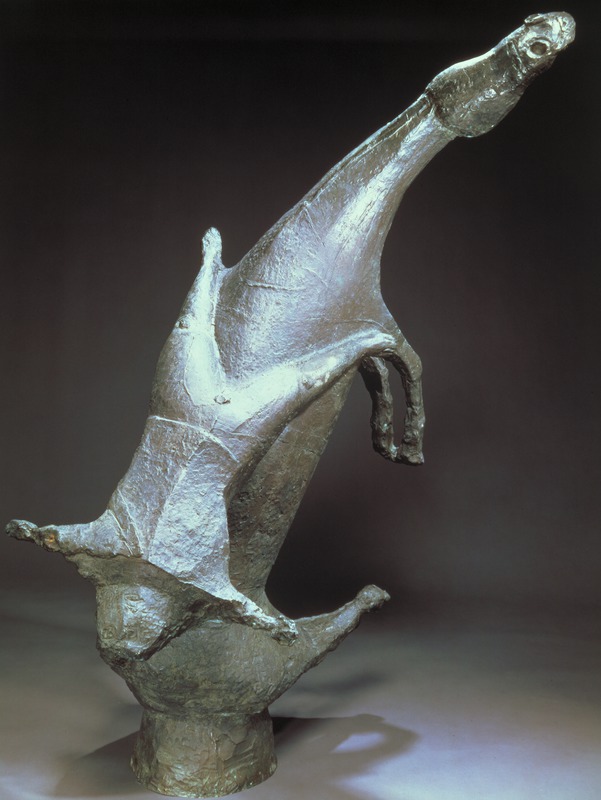
Looking for more examples of gesture lines in art? Check out this post of types of line in art!
Implied Lines
Implied lines are not made by a physical mark in an artwork, but rather by visual proffer. Our optics frequently follow them automatically, and so they describe attention to specific parts of an artwork.
In this example of unsaid lines in art, Grant Wood uses implied lines to emphasize the hatchet in the center. Follow the implied lines from the ladder to the father's hand to George Washington'southward paw to the hatchet. The narrator'southward mitt leads to an implied line likewise.
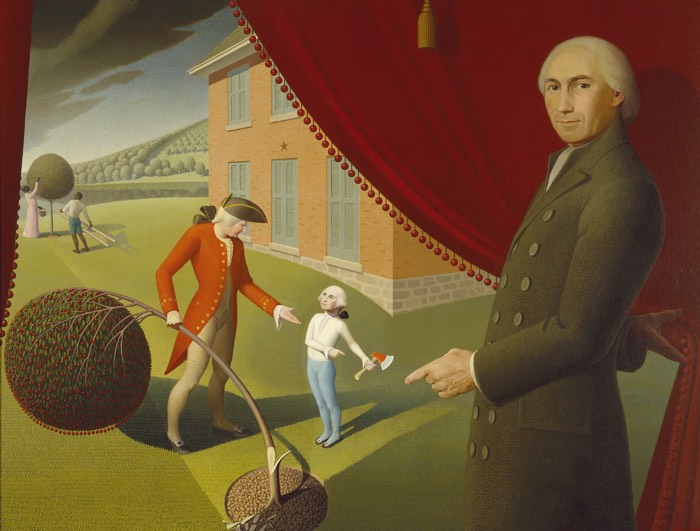
Looking for more examples of implied lines in art? Check out our elements of art line post!
Expressive Lines
Lines that show feeling and emotion are chosen expressive lines.
In this example of expressive lines in art, Edvard Munch uses wavy lines in dissimilarity with a strong straight diagonal line to convey anxiety.
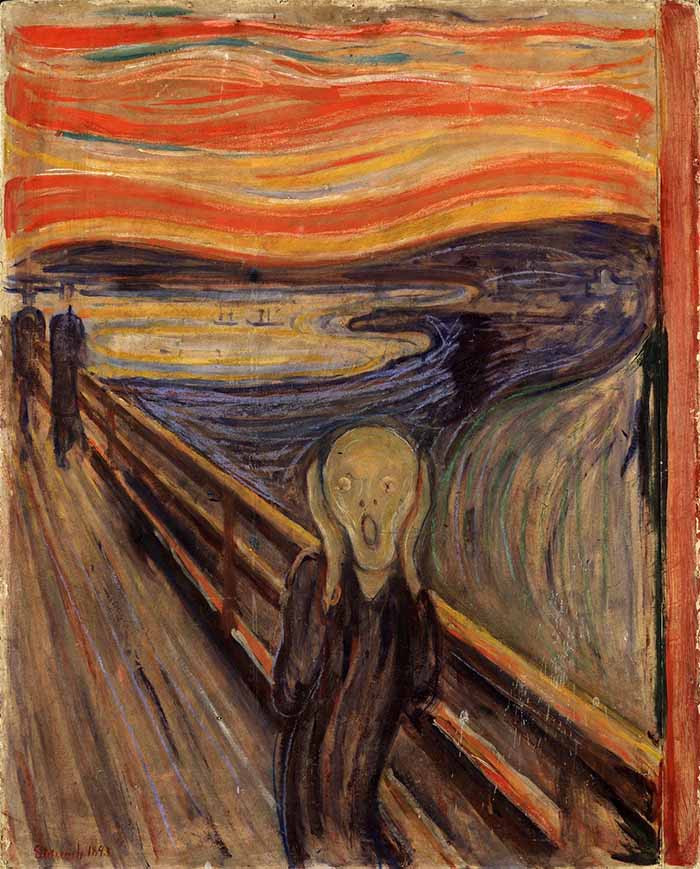
Looking for more examples of expressive lines in fine art? Cheque out the Artworks That Bear witness Line post!
Line in Art Resources
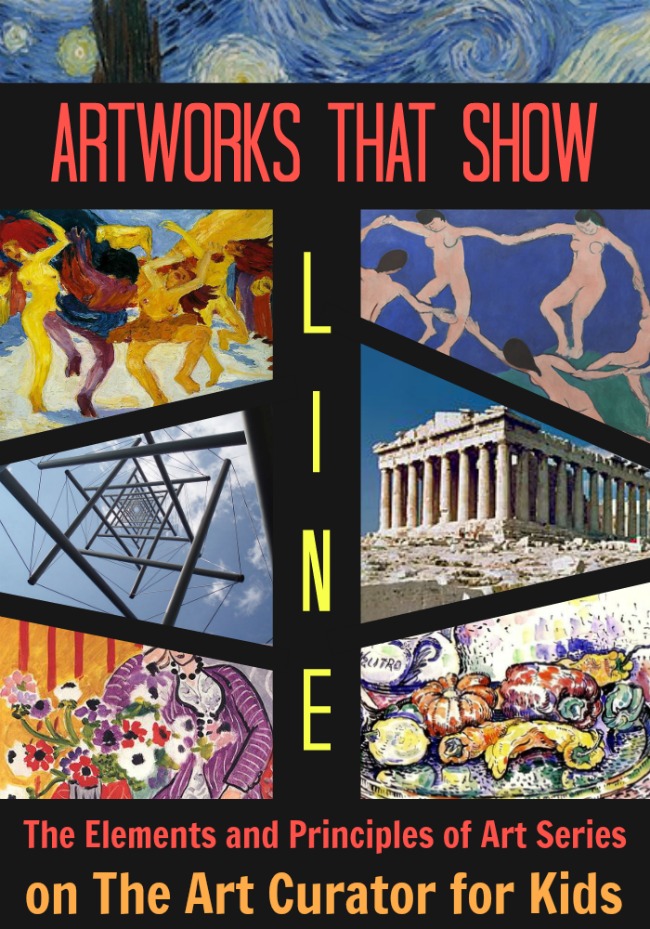
- The Ultimate Collection of Line in Art
- The Fine art of an Idea: Math and Fine art Integration with Sol Lewitt's Teaching
- Arty Factory: Line
Art Grade Curator has a full line lesson available in the Curated Connections Library including all of post-obit line topics: contour lines, gesture lines, unsaid lines, expressive lines, lines in architecture, and characteristics of line.
Shape
A shape is an enclosed area of space created through lines or other elements of the composition.
Geometric Shapes
Geometric shapes are precise areas that tin can be fabricated using a ruler or compass. These shapes can be elementary or circuitous and generally give an artwork a sense of order.
In this example of geometric shapes in art, Picasso uses circles, triangles, crescents, and rectangles.
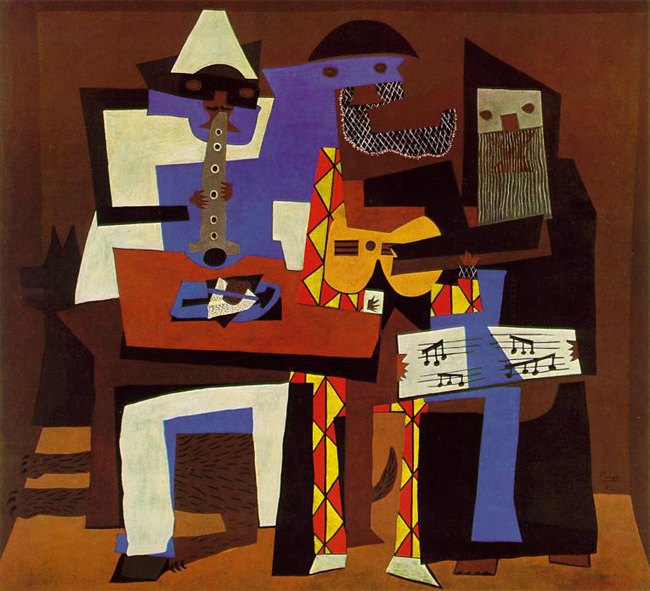
Looking for more than examples of geometric shapes in art? Check out the Artworks That Use Shape post!
Organic/Free-Form Shapes
Organic shapes are circuitous and imprecise. They give works of art a natural feeling.
In this artwork, Grace Hartigan uses a variety of examples of organic and free-form shapes.
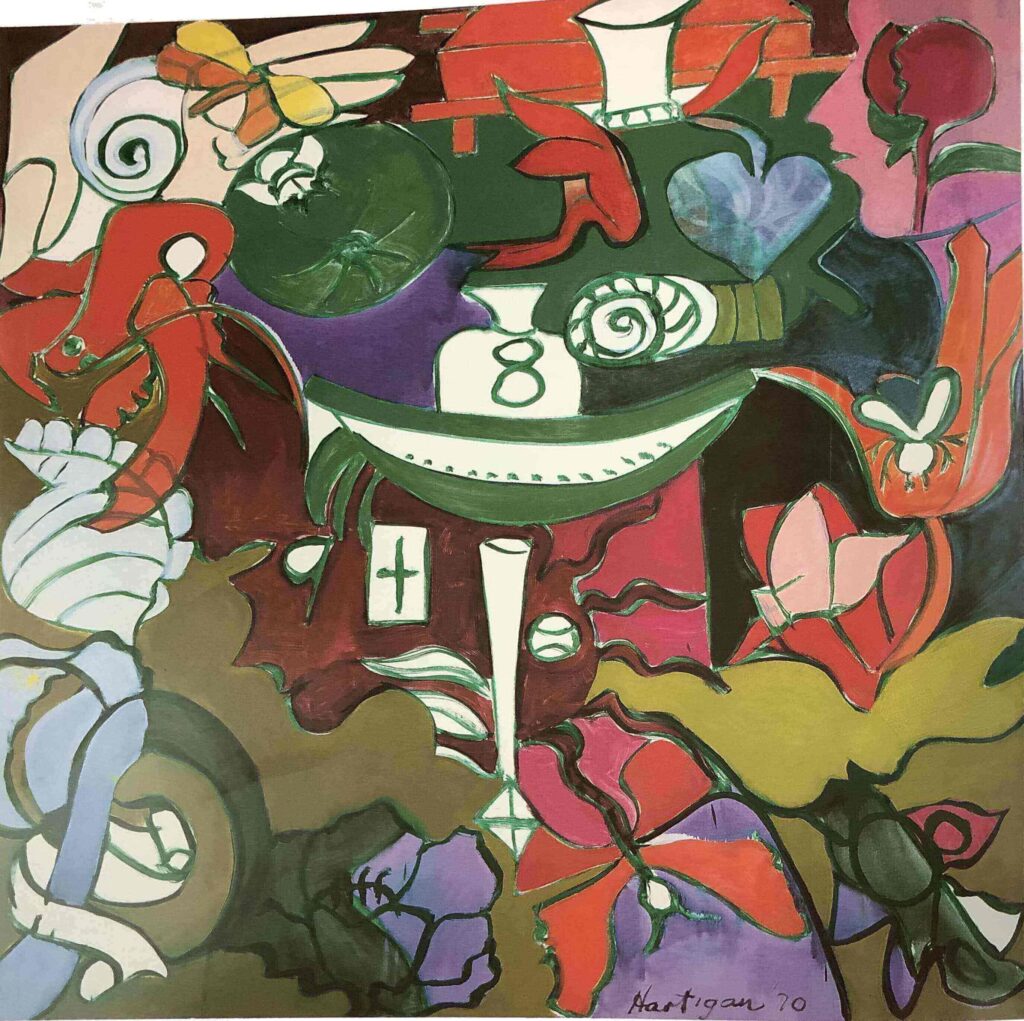
Looking for more examples of organic shapes in fine art in art? Check out this listing of art using shape!
Shape in Art Resources
- The Ultimate Drove of Shape in Art
- Paper Sculpture Project Inspired by Geometric MADI Art
- When a Line Bends . . . A Shape Begins (Book)
- I Spy Shapes in Art (Volume)
- High-sounding Mill: Shape
Form
Form is an element of art closely related to shape. Like shape, form can be geometric or organic. However, unlike shape, form is always three-dimensional. A form is measurable by length, width, and height, and encloses volume. Forms tin can be well-divers, such as a cube, or they tin exist free-grade, such every bit an fauna. They can be created by combining two or more shapes and are ofttimes defined by the presence of shadow and how low-cal plays confronting it in an artwork.
In this examples of class in fine art, Dalí uses geometric forms (spheres) to create his image.
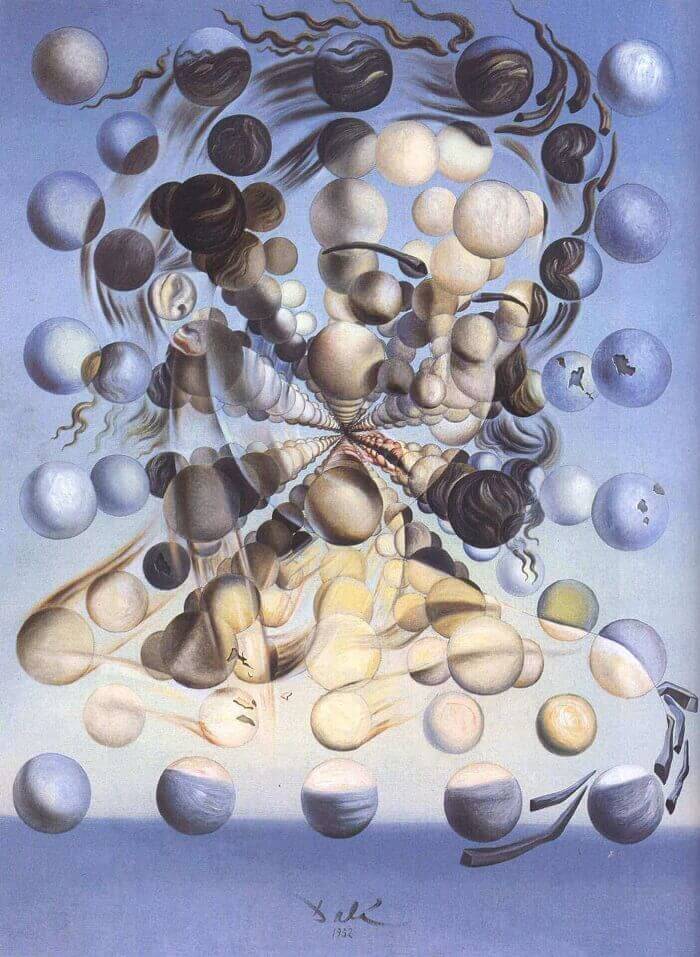
In this example of class in art, Niki de Saint Phalle uses organic form.
Course in Fine art Resources
- The Virtual Instructor: Grade
- Ready Free the Angels: How Carved Sculptures Are Fabricated
- National Gallery of Art: Class (3rd-4th Form Lesson)
Value
Value in fine art refers to the lightness and darkness of colors and is often described in varying levels of contrast. White is the lightest value while black is the darkest. To create a tint of a color, the creative person adds white. To create a shade, the artist adds black.
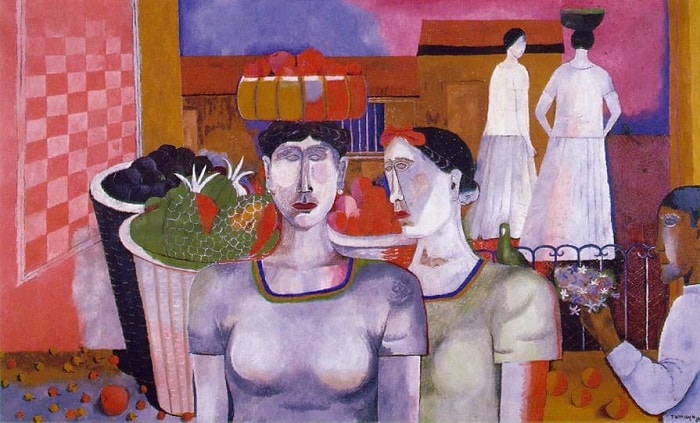
In this example of value in art, Rufino Tamayo adds white to a color to create a tint in the clothes of the women, one of the baskets, and in the checkerboard on the wall.
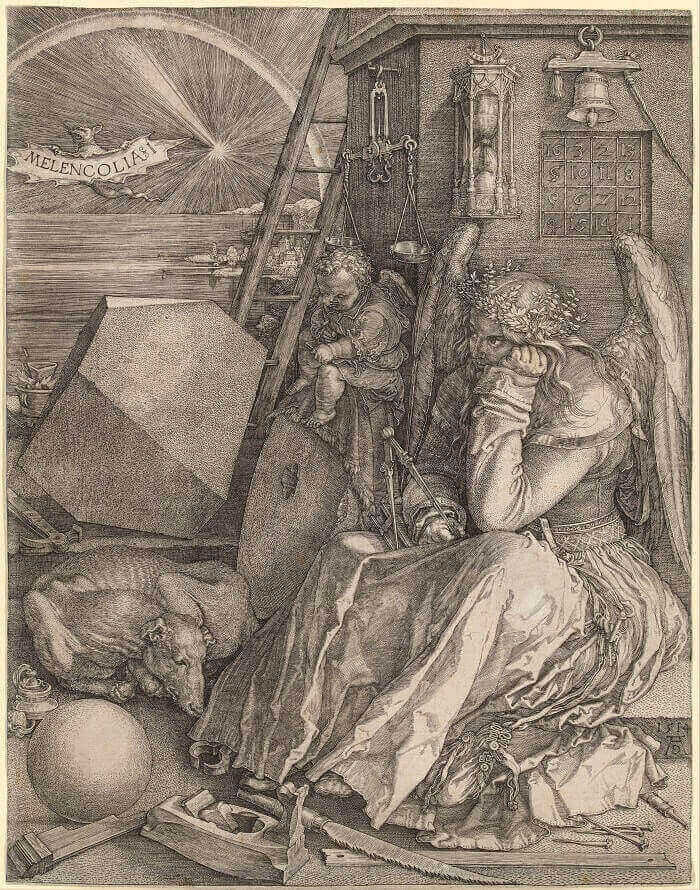
In this example of value in art, Dürer creates a wide range of values using the shading techniques of hatching, cantankerous-hatching, and stippling.
Value in Fine art Resource
- Drawing Dimension – Shading Techniques (Book)
- The Virtual Instructor: Value
- NY Times: Four Means to Think about Value
Texture
Texture refers to the tactile qualities of a surface. This element of art deals with the way objects experience or the fashion it looks like they would experience.
Tactile or Actual Texture
Tactile texture is the actual feeling of a surface that can exist touched. Think of the actual texture of a sculpture or a painting created with the impasto technique.
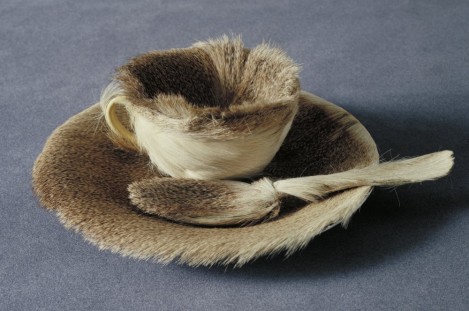
In this example of tactile or bodily texture in sculpture, Meret Oppenheim uses bodily fur to cover the saucer, cup, and spoon.
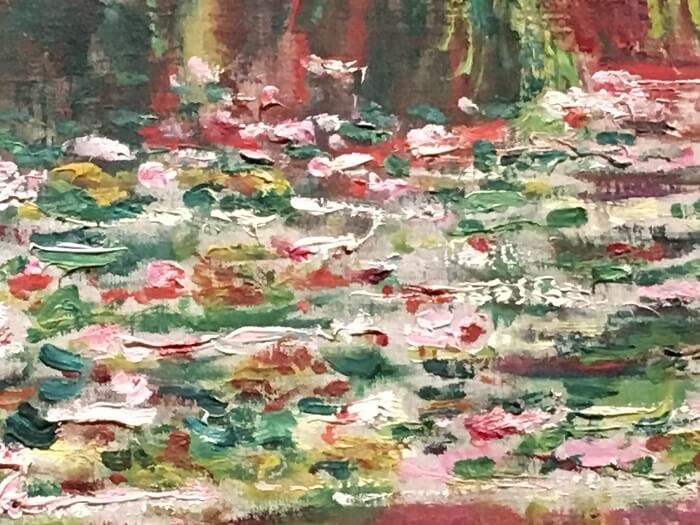
Impasto is the technique of applying paint very thickly to the surface. In this closeup of Water Lily Swimming, y'all tin can see Monet'due south thick application of pigment to create actual/tactile texture.
Looking for more elements of fine art examples of tactile texture in art? Check out the Texture in Art Examples post!
Visual Texture
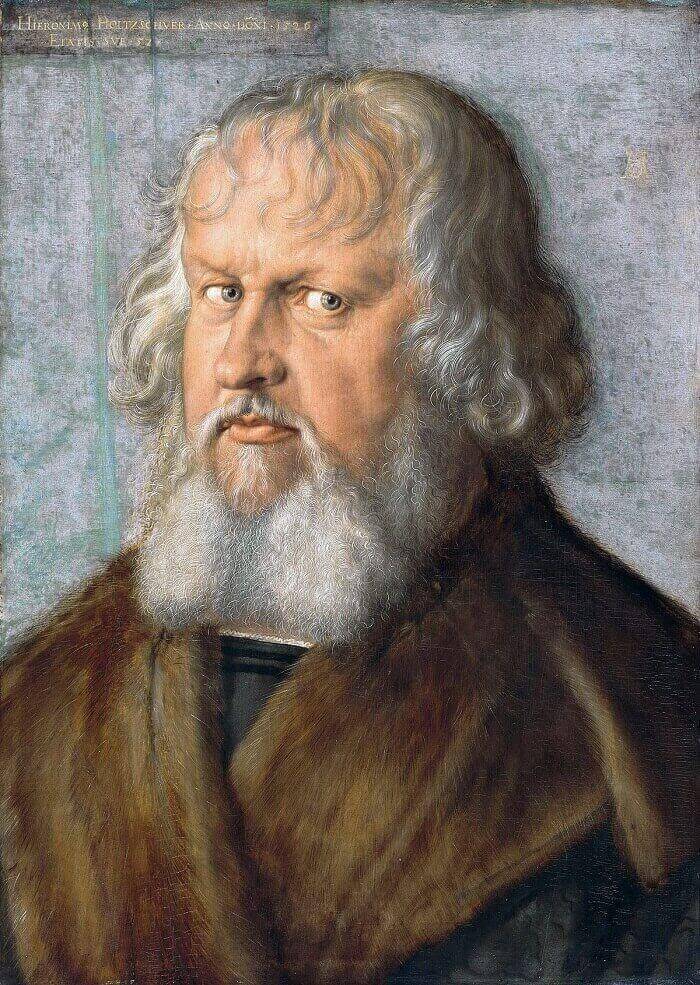
Visual texture is the illusion of texture in an artwork. Retrieve of a photograph of a woods. The texture of the trees and leaves is seen, but the photograph remains smoothen.
Albrecht Dürer mimics creates the visual texture of thick fur in his painting of Hieronymus Holzschuher, but the actual texture is that of oil paint.
For more examples of visual texture in art, cheque out our post of texture in art examples!
Texture in Fine art Resource
- The Ultimate Collection of Texture in Fine art Examples
- Sophia: Texture
- Arty Manufacturing plant: Texture
- Rodin'southwardThe Burghers of Calais
Space
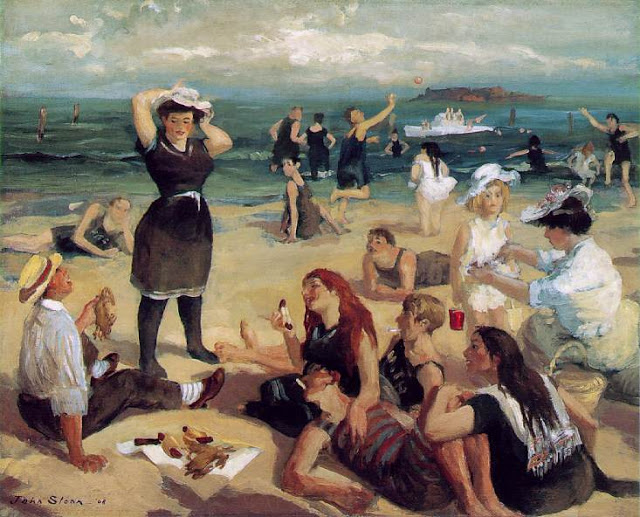
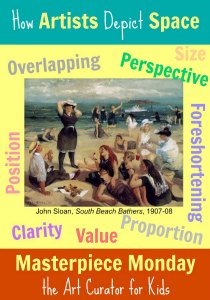
Space is the element of art that is concerned with how an artwork depicts depth. Information technology is how artists make a ii-dimensional surface expect 3-dimensional. Space can give the illusion of objects in an artwork being close, far away, or overlapping one some other.
In this example of space in art, John Sloan uses overlapping, foreshortening, relative size, perspective, and more than. For more information about this painting and how artists depict space, check out this weblog mail nearly the artwork.
Linear Perspective
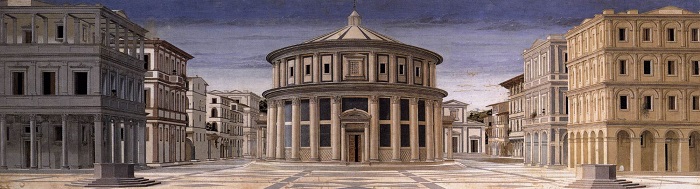
Linear perspective is the mathematical system by which an artist uses lines to create the illusion of deep, iii-dimensional space on a two-dimensional surface.
Piero della Francesca was one of the forerunners of linear perspective. In Ideal City, he used i-signal linear perspective to show the depth of the infinite.
Looking for more than examples of linear perspective in art? Check out the Artworks That Bear witness Space mail service!
Atmospheric Perspective
Atmospheric perspective, sometimes called aerial perspective, refers to how objects that are far away often announced fuzzier or less detailed than objects that are close due to the contrast between light and dark being increasingly reduced by the effects of atmosphere. Artists use value and shading to mimic atmospheric perspective and give their artworks a realistic advent.
In this example of atmospheric perspective in art, the trees and mountains in the groundwork are fuzzier and less detailed than the items in the foreground.
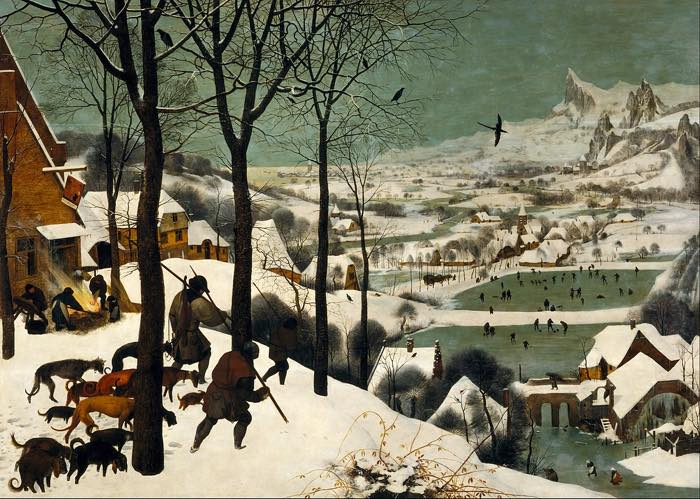
Looking for more examples of atmospheric perspective in fine art? Cheque out this list of space in art examples!
Positive and Negative Space
In add-on to space being a way to show depth, artists also apply positive and negative space equally elements of art. Positive infinite is the areas of the artwork filled with the content, and negative space is the space in betwixt.
In Rodin's The Cathedral, the empty negative space between the hands creates as much emotion and power as the positive space of the easily.
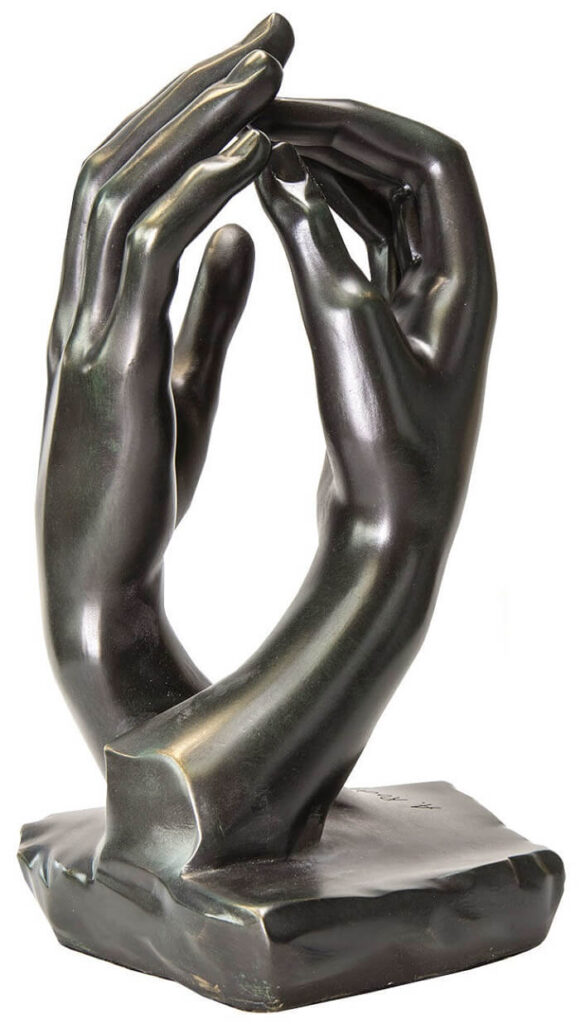
For more examples of positive and negative space in art, check out our elements of art space postal service.
Space in Art Resources
- The Ultimate Collection of Space in Fine art Examples
- How Artists Describe Space
- Perspective Made Like shooting fish in a barrel (Book)
- Sophia: Space
- NY Times: v Ways to Think About Space
Download the Gratuitous Elements and Principles Printable Pack
This pack of printables was designed to piece of work in a variety of means in your classroom when teaching the elements and principles of art. You can print and hang in your classroom as posters/anchor charts or you tin can cut each chemical element and principle of fine art in its own individual card to use as a lesson manipulative.
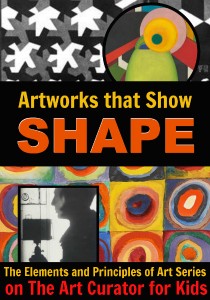
More than Elements of Fine art Examples
For more examples of elements and principles of art, check out more from our elements of art examples serial below.
0 Response to "7 Elements of Art Space Photographs That Show Value Element"
Post a Comment